
EternalClock
Digital New Crescent Calendar
UTC
New Crescent Dates
Based on NASA/JPL DE440 Ephemeris — Observed from Jerusalem
Sign in to see new crescent dates in the calendar
Sign InEternalClock is an independent project, not endorsed or affiliated with NASA.
Definition of the New Crescent
The new crescent — from the Greek neomēnia, "new moon" — originally designated the time of the new moon and, by extension, the first day of the lunar month, often associated with the appearance of the first visible crescent after conjunction. This astronomical phenomenon served as the foundation for time calculation in most ancient civilizations: in Egypt, Arabia, Judea, Greece, and Rome, observation of the nascent crescent marked the beginning of a new month in calendars based on the Moon or on lunisolar cycles.
This millennia-old practice, which consisted of scanning the western horizon at twilight to detect the thin thread of lunar light, has traversed the ages and remains alive today in various religious traditions, as well as within scientific communities and passionate observers who continue to document the first visibility of the crescent.
Despite advances in modern astronomy, the first visibility of the crescent remains a challenge: it depends on a set of variables — lunar altitude, twilight brightness, atmospheric conditions, observer's geographic position — that make its prediction delicate and its observation by eyewitnesses sometimes subject to controversy. Communities around the world continue to rely on the human eye to confirm the appearance of the crescent, thus perpetuating a dialogue between science and tradition thousands of years old in the face of a celestial mechanics — a clock whose only the Creator possesses perfect understanding.
Our algorithm humbly attempts to meet this challenge by performing near-real-time astronomical calculations to estimate the moment of first lunar crescent visibility from Jerusalem (31.77°N, 35.22°E, altitude ~750 m). Drawing on both the testimony of ancient observation practices and contemporary data, it seeks to reconcile the rigor of scientific calculation with the ancestral wisdom of crescent watching.
Lunar Phases
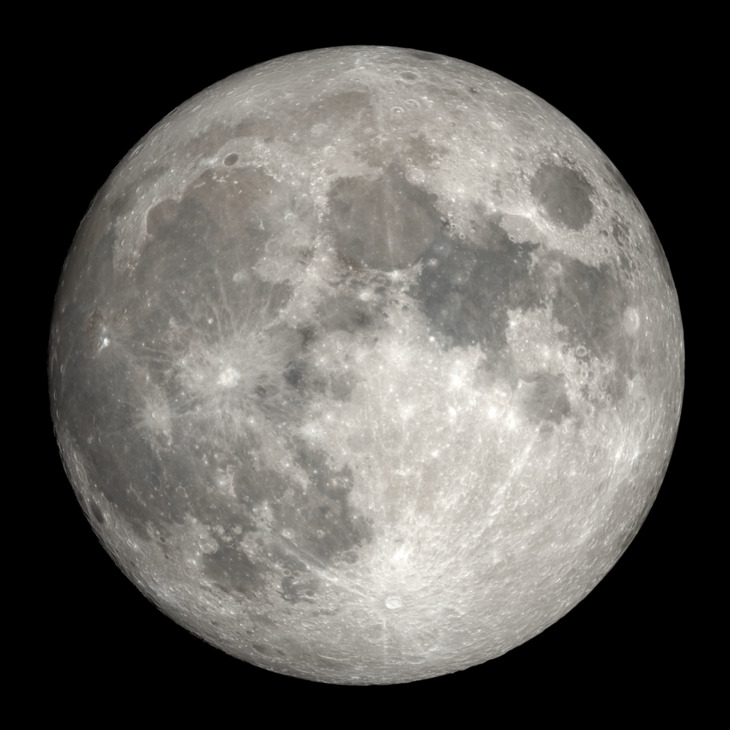
Phase
99.6%
Age
13.4 days
Distance
391585 km
Diameter
1830"
RA (J2000)
12.2144h
Dec (J2000)
-3.89°
Data fetched at 04/01/2026, 11:33:00 AM UTC
Lunar visualization provided by the NASA Scientific Visualization Studio (SVS). Visualizer: Ernie Wright (USRA) – Scientist: Noah Petro (NASA/GSFC) – Producer: James Tralie (ADNET Systems, Inc.). Data source: NASA's Lunar Reconnaissance Orbiter (LRO), in lunar orbit since 2009, provides high-resolution topographic measurements via its Laser Altimeter (LOLA) and imaging via its Camera (LROC). This data enables unprecedented lunar surface visualization and precision in lunar calculations.
Calendar Subscription
Download or subscribe to import into Google Calendar, Apple Calendar or Outlook with automatic updates.
Subscribe to download iCalGoogle Calendar · Apple Calendar · Outlook
Roddy Carlo & Co — eternalclock.com